
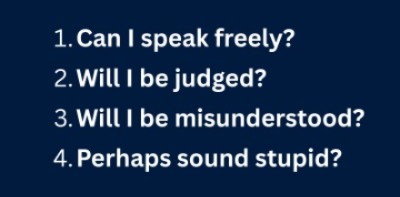
Have you ever kept quiet in a meeting that you had something to contribute to or needed some clarification on? Let’s just say you may have been battling psychological safety.
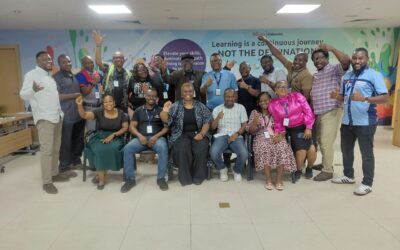
2 days ago this was my focus facilitating a workshop with a leadership team.
So, psychological safety was first coined by Kahn(1990) who argued it was a critical component of engagement. He described it as a sense of being able to show and employ one’s authentic self. This is evident in how much we feel we can voice opinions without fear of negative consequences to our self-image, status, or career.
So jump to 2012, the term Psychological safety resurfaces, and this time, is made popular by Google through their project, Aristotle.
Now this is where it gets interesting…
Project Aristotle was an extensive research named after Aristotle’s adage that “the whole is greater than the sum of its parts.” The research analysed 180 teams and more than 250 variables with the aim of identifying why some of its teams soared while others struggled.
It began with a hypothesis that the best team will probably have a good mix of diifferent types of people e.g. highly intelligent PhDs mixed up with great engineers. The findings were rather surprising, revealing that team composition was largely irrelevant to team effectiveness. Instead, the single biggest predictor of success was how the team worked together and they identified 5 key factors ranked by order of importance:
1. Psychological Safety: A belief that members can be themselves, take interpersonal risks and be vulnerable without fear of judgement.
2. Dependability: Teammates complete high-quality work on time. My favourite 😍 but not number 1 as we can see.
3. Structure and Clarity: Roles, goals, and action plans are clearly defined.
4. Meaning of Work: Team members find personal importance in their tasks.
5. Impact of Work: Members believe their work matters and creates positive change.
Psychological safety was the number 1 factor present in high perfoming teams. Teams with high psychological safety performed 27% better.
I can hear someone saying this looks good but how can I make this happen at my workplace or in my team. Well, the research showed that two group norms predict psychological safety in high performing teams and they are:
1 Equality in Conversational Turn-Taking: Everyone speaks for a similar amount of time, no single voice dominates conversations. Thus, silence is a red flag and a signal of low safety.
2. High Average Social Sensitivity: Team members are skilled at reading and responding positively to other members non-verbal cues i.e. body language, tone of voice, facial expressions etc.
Psychological safety does not equate to having no conflict but rather constructive conflict including having difficult conversations that address issues and better align a team to achieve its goals.
So, there you go. Easy, peasy to try out?
I told you my job has perks…
Your thoughts?

Getting Performance Management Right
So, performance appraisals make performance worse, and the process is so time consuming that the costs outweigh the benefits. These are some of the findings cited by performance management research....

0 Comments